An Unexpected Cross: A Jewish Surgeon, the Mark of the Tav, and the Christians Who Stood By
Recovering from breast cancer, Jewish surgeon Dr. Sheila Nazarian found a cross on her chest and saw in it the Christians who have stood with her people.
TL;DR: A Jewish surgeon recovering from breast cancer found a cross drawn on her chest by her own surgeon. She chose to see in it the Christians who have stood with her people. It's a mark worth living up to.
Some testimonies come from unexpected places.
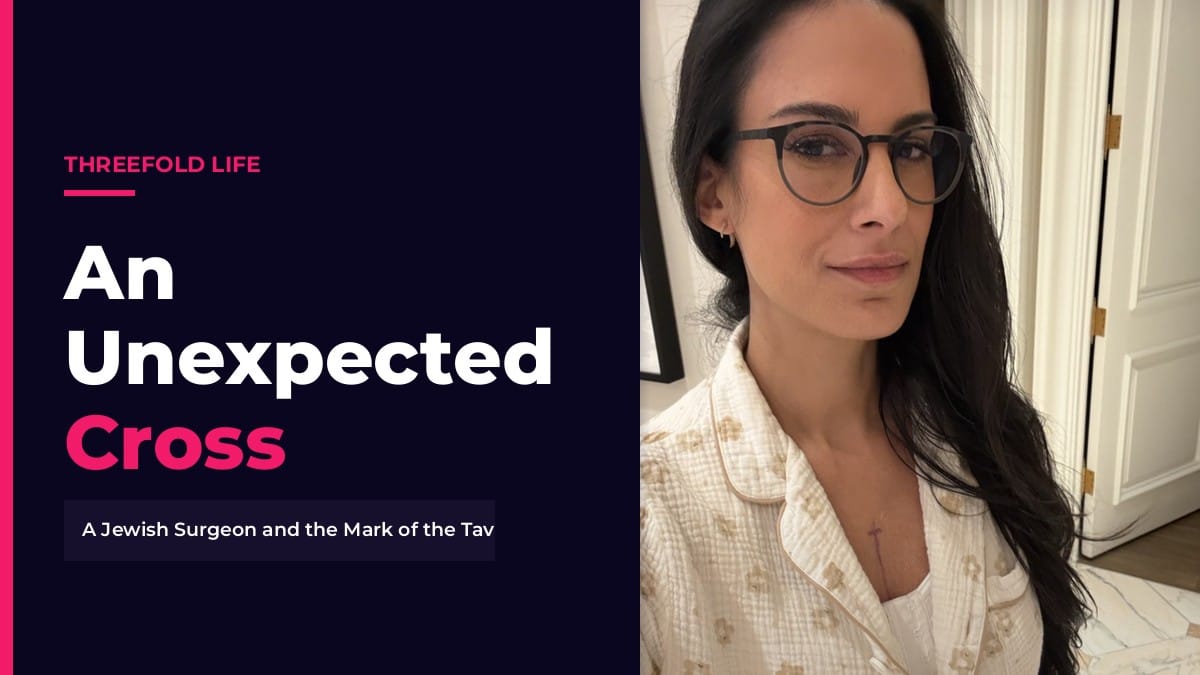
Dr. Sheila Nazarian is a board-certified plastic and reconstructive surgeon in Beverly Hills, known to many from the Netflix series Skin Decision. She was born in New York to an Iranian Jewish family. As a child she was smuggled out of the Islamic Republic of Iran with her mother and sister, hidden in the back of a truck under a load of corn. In recent years she has become one of the most outspoken Jewish voices online against antisemitism.
This weekend she shared something deeply personal. After surgery for Stage 0 breast cancer, she noticed that the marking her surgeon had drawn for the reconstruction was a simple cross. In a post on X titled "An Unexpected Cross," she wrote:
"I am a Jewish woman. And for the past two weeks, I have carried a cross on my chest. My surgeon drew it during my breast reconstruction, a simple anatomical marking. But every time I look in the mirror, I see something more. I see the Christians who have stood beside the Jewish people when so much of the world turned away. Those who have defended us, prayed for us, and reminded us that we are not alone."
She went on:
"The cross is not my religious symbol. But the love, protection, and solidarity it has come to represent to me are universal. Sometimes the most meaningful messages are the ones we never intended to receive. And sometimes, healing comes with unexpected reminders of who stands beside you. Different faiths. Shared humanity. And a second chance at life."
We want to receive her words with the same grace she offered them. And we rejoice with her: by her own account, the surgery left her cured and doing well.
The mark of the tav
Dr. Nazarian points to a detail most Christians have never heard. The last letter of the Hebrew alphabet is tav (ת). In the ancient Paleo-Hebrew script it was written as a simple cross, + or ×.
That letter appears in one of the most sobering visions in Scripture. In Ezekiel 9, the prophet sees judgment about to fall on Jerusalem. Before it falls, a man clothed in linen with a writer's inkhorn is sent through the city:
"And the LORD said unto him, Go through the midst of the city, through the midst of Jerusalem, and set a mark upon the foreheads of the men that sigh and that cry for all the abominations that be done in the midst thereof." (Ezekiel 9:4)
The word translated "mark" is tav. Then the command goes out to the executioners: "come not near any man upon whom is the mark" (Ezekiel 9:6).
Dr. Nazarian calls it "a mark of survival" that meant "You shall live." That's the heart of it. The text also tells us who received it: not simply good people, but those who grieved and wept over the sin around them, on their foreheads. The mark of life went to the brokenhearted. Early Christian writers such as Tertullian noticed the shape of that letter and saw in it a foreshadowing of the cross. Dr. Nazarian doesn't share that faith, and we won't put it in her mouth. But it's striking that a Jewish woman, reflecting on her own healing, arrived at the same ancient letter.
The Righteous Among the Nations
She also remembers the Righteous Among the Nations, the non-Jews who risked their lives to save Jews during the Holocaust. Yad Vashem in Jerusalem has formally recognized 28,707 of them from 51 countries (as of January 1, 2024). Many were Christians who hid Jewish children in their homes, convents and orphanages, sometimes under Christian names and papers, so they could live.
Yad Vashem itself notes that this number doesn't reflect every rescuer, only the cases that could be documented. Many more acted and were never named.
Here honesty matters. The history of Christians and Jews also holds centuries of contempt, expulsion and violence carried out under the sign of the cross. For many Jews, that symbol still brings fear, not comfort. That's exactly why her words are so moving. She has chosen to see the cross through the lives of those who protected her people, not those who persecuted them.
What Should Christians Make Of This?
For believers, standing with the Jewish people isn't a political trend. It's rooted in the promise God gave Abraham:
"And I will bless them that bless thee, and curse him that curseth thee: and in thee shall all families of the earth be blessed." (Genesis 12:3)
And the Apostle Paul reminds Gentile Christians where they stand:
"Boast not against the branches. But if thou boast, thou bearest not the root, but the root thee." (Romans 11:18)
Dr. Nazarian looked at a cross and saw people who stayed when the world turned away. That's a high compliment, and also a calling. Antisemitism is rising again in the West. The question for the Church is whether the next generation of Jews will be able to say the same thing about us.
Different faiths. Shared humanity. We pray for her full recovery, and that those of us who carry the cross will keep giving her reason to see in it love, protection and faithfulness.